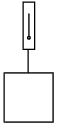
a) What is the force that the scale is pulling with (read the N side of the scale)?
b) The block is not moving, so there must be another force acting on it to balance out tension. What is that force called? How big is it?
c) Draw in the diagram on the right the two forces acting on the block, showing their direction and labeling them with their names and their size.
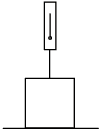
a) There are three forces acting on the block as you lift: gravity, the normal force from the table, and the tension force from the scale. Draw and label arrows representing these forces on the diagram to the right.
b) What happens to the reading on the scale as you start to lift?
c) What is the scale reading when the block rises off the table?
d) Since nothing is moving as you lift, the normal force and the tension force must add up to be equal to the weight of the block. What is the normal force when the scale reads 2 N?
e) What is the normal force when the block lifts off the table?
The remaining questions may be completed in any order. A three-beam balance is needed for one question; if there aren't any free when you get to that question, you can go on to another question and do that one later.
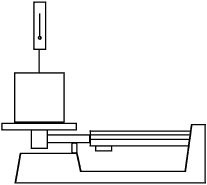
a) What is the spring scale reading?
b) Draw and label the forces acting on the block in the picture to the right.
c) Add up the forces in each direction to show that they are balanced.
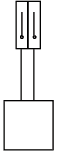
a) With what forces are the two scales pulling?
Scale 1:
Scale 2:
b) Add up the forces in each direction. Do the two scales balance out the gravity force?
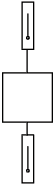
a) With what forces are the two scales pulling?
Top scale:
Bottom scale:
b) In the diagram to the right, draw and label all the forces acting on the block.
c) Add up the forces acting in each direction to show that they balance out.
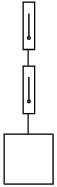
a) With what forces are the two scales pulling?
Top scale:
Bottom scale:
b) Why are they each pulling the full weight of the block, rather than half its weight?